Leta i den här bloggen

Visar inlägg med etikett COVID-19. Visa alla inlägg

tisdag 30 maj 2023

Veren viskositeetin nousu ja punsasolujen liikaklimppiytyvisyys vaikeassa Covid-19 infektiossa


. 2022 Mar 1;97(3):283-292.
doi: 10.1002/ajh.26440. Epub 2021 Dec 23. Increased blood viscosity and red blood cell aggregation in patients with COVID-19
DOI: 10.1002/ajh.26440 Free article
Abstract

The aim of this study was to (1) analyze blood viscosity, red blood cell (RBC) deformability, and aggregation in hospitalized patients with Coronavirus disease 19 (COVID-19); (2) test the associations between impaired blood rheology and blood coagulation; and (3) test the associations between impaired blood rheology and several indicators of clinical severity. A total of 172 patients with COVID-19, hospitalized in COVID-unit of the Internal Medicine Department (Lyon, France) participated in this study between January and May 2021. Clinical parameters were collected for each patient. Routine hematological/biochemical parameters, blood viscosity, RBC deformability and aggregation, and RBC senescence markers were measured on the first day of hospitalization. A control group of 38 healthy individuals was constituted to compare the blood rheological and RBC profile. Rotational thromboelastography was performed in 76 patients to study clot formation dynamics. Our study demonstrated that patients with COVID-19 had increased blood viscosity despite lower hematocrit than healthy individuals, as well as increased RBC aggregation. In-vitro experiments demonstrated a strong contribution of plasma fibrinogen in this RBC hyper-aggregation. RBC aggregation correlated positively with clot firmness, negatively with clot formation time, and positively with the length of hospitalization. Patients with oxygen supplementation had higher RBC aggregation and blood viscosity than those without, and patients with pulmonary lesions had higher RBC aggregation and enhanced coagulation than those without. This study is the first to demonstrate blood hyper-viscosity and RBC hyper-aggregation in a large cohort of patients with COVID-19 and describe associations with enhanced coagulation and clinical outcomes. © 2021 Wiley Periodicals LLC.

Veren viskositeetti vaikessa Covid-19:ssa

https://pubmed.ncbi.nlm.nih.gov/?term=blood+viscosity+in+severe+covid-1

Abstract

Background: Changes in blood viscoelastic properties have been proposed previously as etiopathogenesis for severe complications in COVID-19 and some cases of Sudden Deafness (SD). This is an attempt to verify if SD cases in patients admitted for SARS-Cov-2 infection can be correlated.

Patients and methods: A prospective follow-up was carried out with COVID-19 patients, monitoring their blood viscosity (BV) at high shear rate (300 s-1) and inquiring them periodically for eventual hearing loss. This measurement was extended to cases bearing of SD in 2019 and 2020 without infection and a control group of healthy normoacoustic subjects.

Results: The normality range was 4,16 ± 0,62 cps. 330 cases admitted for COVID-19 were evaluated from February 24th, 2020 to March 24th, 2021, 85 of them attended in ICU. After anamnesis and Audiometric Tone Thresholds developed as soon as possible, 9 SD were detected, all belonging to ICU group. The mean BV was 4,38 ± 0,43 cps in the ward group, 4,53 ± 0,39 cps in the ICU patients without SD, and 4,85 ± 0,52 cps in the cases with SD, with statistically significant differences. Highest BV elevations in the SD cases were detected between days 6 and 10 of hospital admission. In 2019 four cases consulted with SD, and another two did it in 2020 without a diagnosis of COVID-19, with normal BV values.

Conclusions: During SARS-Cov-2 infection, patients may show high BV and SS, although an inpatients control group and a larger sample volume are necessary to confirm the predisposition to hyperviscosity. The incidence of hearing damage is considerable if its possible appearance is taken into account, within the limitations of critical patients with COVID-19.

Keywords: Blood viscosity; COVID-19; Hipoacusia neurosensorial; SARS-Cov-2; Sensorineural hearingloss; Sordera súbita; Sudden deafness; Viscosidad sanguínea.


söndag 17 juli 2022

 Google haku:"Covid19 i Göteborg"

Statistik covid-19 i Västra Götaland

På den här sidan samlar vi statistik om covid-19 och vaccination  i Västra Götaland.

Antal inneliggande patienter med covid-19

Obs! Mellan 19 maj och 13 juli 2022 samlades ingen data över antal inneliggande. Det finns inga uppgifter under denna period.

Den 14 juli 2022 hade sjukhusen i Västra Götalandsregionen totalt 96 inneliggande patienter med covid-19, varav 1 inom intensivvården, IVA.

NU-sjukvården: 19 patienter, varav 0 på IVA
Sahlgrenska Universitetssjukhuset: 55 patienter, varav 0 på IVA
Sjukhusen i Väster: 5 patienter, varav 0 på IVA
Skaraborgs sjukhus: 13 patienter, varav 0 på IVA
Södra Älvsborgs sjukhus: 4 patienter, varav 1 på IVA 

Statistiken omfattar samtliga inneliggande patienter som testat positivt för covid-19, oberoende av huruvida covid-19 var anledningen till att de lades in på sjukhus.

tisdag 26 maj 2020

COVID--19, PAD - löydös systeeminen endoteliitti

Electron microscopy of SARS-CoV-2: a challenging task – Authors' reply
 
We thank Cynthia Goldsmith and colleagues for their interest in our recent Correspondence.
We described autopsy findings from patients who had died from COVID-19 and showed a systemic endotheliitis with evidence of loss of integrity of the endothelial monolayer.
The framework of endotheliitis provides an explanation for the unique predilection of severe acute respiratory syndrome coronavirus 2 (SARS-CoV-2) in those individuals with hypertension, diabetes, or established cardiovascular disease, a group known to have pre-existing endothelial dysfunction. COVID-19-endotheliitis could also explain impaired microcirculatory function across different organs and the frequently observed prothrombotic state with in-situ clot formation. Endothelial infection and injury by SARS-CoV-1 has been shown.
Our demonstration of viral particles using electron microscopy (EM) is supported by several reports independently describing ultrastructural round virus-like particles in the setting of a SARS-CoV-2 infection.
We demonstrated tubulo-reticular structures in the immediate vicinity of the spherical particles that are strikingly identical to SARS-CoV-1-associated membrane changes described by Goldsmith and colleagues in 2004.
In our EM thin-section images, the virus-like particles were relatively large (mean diameter 180 nm [SD 10]). However, subsequent analysis of more EM images has revealed a mean particle size of 67 nm (SD 15 nm, median 65 nm, 95% CI 41–102; n=33). Zhu and colleagues
noted that SARS-CoV-2 virions ranged from “about 60 to 140 nm”. In another recent study,
virus-like particles in patients with confirmed SARS-CoV-2 infection were 70–110 nm in diameter. By comparison, SARS-CoV-1 viral particles analysed with the same technique (ultrathin EM imaging) were 50–80 nm in diameter.
Goldsmith and colleagues have studied coronavirus isolates grown in cell culture, whereas our EM data of virus-like particles were obtained from a post-mortem kidney allograft obtained during autopsy. Since most other recent reports of patients with COVID-19 also describe postmortem findings, it remains unclear to what extent tissue type (cell culture, fresh biopsy material, or autopsy material), time to fixation, and postmortal autolysis alter subcellular structures in preparation for EM. This notwithstanding, these observed particles in patients with COVID-19 should be best designated as virus-like particles because definitive assignment of these structures as SARS-CoV-2 virions requires immuno-EM.
Investigations with vascular organoids that preceded our observations
showed that SARS-CoV-2 can infect human blood vessels via the ACE2 pathways, providing the first and direct evidence that the virus can indeed invade human vasculature. Our findings have also been confirmed in descriptions of renal tropism of SARS-CoV-2, with detection of SARS-CoV-2 protein in human glomerular endothelial and epithelial cells.
Importantly, our demonstration of virus cell infection in the kidney and endotheliitis
points to a general host inflammatory response causing hyperinflammation as a principal participant in the vascular pathology of COVID-19. Endothelial cell dysfunction, which might subsequently induce a prothrombotic state, could thus explain the vascular microcirculatory complications seen in different organs in patients with COVID-19.
..  Sitaatti artikkelista  : ..cell infection and endotheliitis in COVID-19. Lancet. 2020; 395: 1417-1418

måndag 9 mars 2020

COVID-19, nsp16 ( 6799..7096), 298 aminohappoa

 mat_peptide     6799..7096
                     /product="2'-O-ribose methyltransferase"
                     /note="nsp16; 2'-o-MT; produced by pp1ab only"
                     /protein_id="YP_009725311.1"
                     /calculated_mol_wt=33324..
FEATURES             Location/Qualifiers
     source          1..298
                     /organism="Severe acute respiratory syndrome coronavirus
                     2"
                     /isolate="Wuhan-Hu-1"
                     /host="Homo sapiens"
                     /db_xref="taxon:2697049"
                     /country="China"
                     /collection_date="Dec-2019"
     Protein         1..298
                     /product="2'-O-ribose methyltransferase"
                     /note="nsp16; 2'-o-MT; produced by pp1ab only"
                     /calculated_mol_wt=33324
     Precursor       1..298
                     /derived_from="YP_009724389.1:6799..7096"
ORIGIN      
        1 ssqawqpgva mpnlykmqrm llekcdlqny gdsatlpkgi mmnvakytql cqylntltla
       61 vpynmrvihf gagsdkgvap gtavlrqwlp tgtllvdsdl ndfvsdadst ligdcatvht
      121 ankwdliisd mydpktknvt kendskegff tyicgfiqqk lalggsvaik itehswnadl
      181 yklmghfaww tafvtnvnas sseafligcn ylgkpreqid gyvmhanyif wrntnpiqls
      241 syslfdmskf plklrgtavm slkegqindm ilsllskgrl iirennrvvi ssdvlvnn
// 
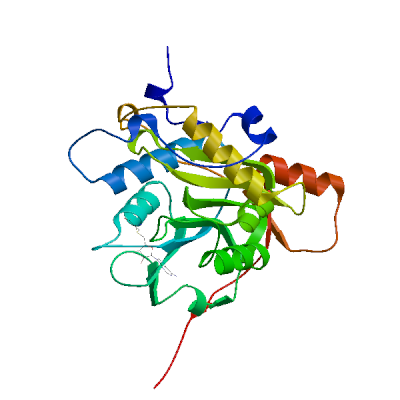
sars2 Swiss model
YP_009725311.1 (298 residues)2'-O-ribose methyltransferase (nsp16):
        Methyltransferase that mediates
        mRNA cap 2'-O-ribose methylation to the 5'-cap structure of viral
        mRNAs. N7-methyl guanosine cap is a prerequisite for binding of nsp16.
        Therefore plays an essential role in viral mRNAs cap methylation which
        is essential to evade immune system.


        High quality models are available. Hetero-oligomeric complex with nsp10 is
        available in hetero section.
        

COVID-19 nsp15 (6453..6798) endoRNAasi , 346 aminohappoa

  mat_peptide     6453..6798
                     /product="endoRNAse"
                     /note="nsp15; produced by pp1ab only"
                     /protein_id="YP_009725310.1"
                     /calculated_mol_wt=38814
 
 
FEATURES             Location/Qualifiers
     source          1..346
                     /organism="Severe acute respiratory syndrome coronavirus
                     2"
                     /isolate="Wuhan-Hu-1"
                     /host="Homo sapiens"
                     /db_xref="taxon:2697049"
                     /country="China"
                     /collection_date="Dec-2019"
     Protein         1..346
                     /product="endoRNAse"
                     /note="nsp15; produced by pp1ab only"
                     /calculated_mol_wt=38814
     Precursor       1..346
                     /derived_from="YP_009724389.1:6453..6798"
ORIGIN      
        1 slenvafnvv nkghfdgqqg evpvsiinnt vytkvdgvdv elfenkttlp vnvafelwak
       61 rnikpvpevk ilnnlgvdia antviwdykr dapahistig vcsmtdiakk pteticaplt
      121 vffdgrvdgq vdlfrnarng vlitegsvkg lqpsvgpkqa slngvtlige avktqfnyyk
      181 kvdgvvqqlp etyftqsrnl qefkprsqme idflelamde fieryklegy afehivygdf
      241 shsqlgglhl liglakrfke spfeledfip mdstvknyfi tdaqtgsskc vcsvidllld
      301 dfveiiksqd lsvvskvvkv tidyteisfm lwckdghvet fypklq
//
SARS2 Swiss model 
YP_009725310.1 (346 residues)Uridylate-specific endoribonuclease (NendoU/nsp15):
        Mn(2+)-dependent,
        uridylate-specific enzyme, which leaves 2'-3'-cyclic phosphates 5' to
        the cleaved bond. 


        Experimental structure (PDB 6vww) and 
        several high quality models are available.
         

COVID-19 nsp12 , RdRp, (932 aminohappoa)

   Protein         1..932
                     /product="RNA-dependent RNA polymerase"
                     /note="nsp12; RdRp; produced by pp1ab only"
                     /calculated_mol_wt=106661
     Precursor       1..932
                     /derived_from="YP_009724389.1:4393..5324"
ORIGIN      
        1 sadaqsflnr vcgvsaarlt pcgtgtstdv vyrafdiynd kvagfakflk tnccrfqekd
       61 eddnlidsyf vvkrhtfsny qheetiynll kdcpavakhd ffkfridgdm vphisrqrlt
      121 kytmadlvya lrhfdegncd tlkeilvtyn ccdddyfnkk dwydfvenpd ilrvyanlge
      181 rvrqallktv qfcdamrnag ivgvltldnq dlngnwydfg dfiqttpgsg vpvvdsyysl
      241 lmpiltltra ltaeshvdtd ltkpyikwdl lkydfteerl klfdryfkyw dqtyhpncvn
      301 clddrcilhc anfnvlfstv fpptsfgplv rkifvdgvpf vvstgyhfre lgvvhnqdvn
      361 lhssrlsfke llvyaadpam haasgnllld krttcfsvaa ltnnvafqtv kpgnfnkdfy
      421 dfavskgffk egssvelkhf ffaqdgnaai sdydyyrynl ptmcdirqll fvvevvdkyf
      481 dcydggcina nqvivnnldk sagfpfnkwg karlyydsms yedqdalfay tkrnviptit
      541 qmnlkyaisa knrartvagv sicstmtnrq fhqkllksia atrgatvvig tskfyggwhn
      601 mlktvysdve nphlmgwdyp kcdrampnml rimaslvlar khttccslsh rfyrlaneca
      661 qvlsemvmcg gslyvkpggt ssgdattaya nsvfnicqav tanvnallst dgnkiadkyv
      721 rnlqhrlyec lyrnrdvdtd fvnefyaylr khfsmmilsd davvcfnsty asqglvasik
      781 nfksvlyyqn nvfmseakcw tetdltkgph efcsqhtmlv kqgddyvylp ypdpsrilga
      841 gcfvddivkt dgtlmierfv slaidayplt khpnqeyadv fhlylqyirk lhdeltghml
      901 dmysvmltnd ntsrywepef yeamytphtv lq
//
   mat_peptide     4393..5324
                     /product="RNA-dependent RNA polymerase"
                     /note="nsp12; RdRp; produced by pp1ab only"
                     /protein_id="YP_009725307.1"
                     /calculated_mol_wt=106661 
https://swissmodel.expasy.org/interactive/JDUya4/models/01
 

COVID-19, nsp6 (3570 .. 3859) 290 aminohappoa, transmembraaninen domeeni

  mat_peptide     3570..3859
                     /product="nsp6"
                     /note="putative transmembrane domain;
 produced by both  pp1a and pp1ab" Protein         <1 ..="">290
                     /product="orf1ab polyprotein"
     mat_peptide     1..290
                     /product="nsp6"
                     /note="putative transmembrane domain; produced by both
                     pp1a and pp1ab"
     CDS             1..4405
                     /gene="orf1a"
                     /coded_by="MT049951.1:266..13483"
                     /note="pp1a"
ORIGIN      
        1 savkrtikgt hhwllltilt sllvlvqstq wslffffyen aflpfamgii amsafammfv
       61 khkhaflclf llpslatvay fnmvympasw vmrimtwldm vdtslsgfkl kdcvmyasav
      121 vllilmtart vyddgarrvw tlmnvltlvy kvyygnaldq aismwaliis vtsnysgvvt
      181 tvmflargiv fmcveycpif fitgntlqci mlvycflgyf ctcyfglfcl lnryfrltlg
      241 vydylvstqe frymnsqgll ppknsidafk lnikllgvgg kpcikvatvq
//
 
 
VERTAILUA VARTEN: AINEN JA SUOMALAINEN SEKVENSSI NSP6 PP1A:STA.sAMAT.
 
3570     s avkrtikgth hwllltilts llvlvqstqw
     3601 slffffyena flpfamgiia msafammfvk hkhaflclfl lpslatvayf nmvympaswv
     3661 mrimtwldmv dtslsgfklk dcvmyasavv llilmtartv yddgarrvwt lmnvltlvyk
     3721 vyygnaldqa ismwaliisv tsnysgvvtt vmflargivf mcveycpiff itgntlqcim
     3781 lvycflgyfc tcyfglfcll nryfrltlgv ydylvstqef rymnsqgllp pknsidafkl
     3841 nikllgvggk pcikvatvq
 
 70      s avkrtikgth hwllltilts llvlvqstqw
     3601 slffflyena flpfamgiia msafammfvk hkhaflclfl lpslatvayf nmvympaswv
     3661 mrimtwldmv dtslsgfklk dcvmyasavv llilmtartv yddgarrvwt lmnvltlvyk
     3721 vyygnaldqa ismwaliisv tsnysgvvtt vmflargivf mcveycpiff itgntlqcim
     3781 lvycflgyfc tcyfglfcll nryfrltlgv ydylvstqef rymnsqgllp pknsidafkl
     3841 nikllgvggk pcikvatvq

COVID-19, nsp5 (3264..3569), 306 aminohappoa

    mat_peptide     3264..3569
                     /product="3C-like proteinase"
                     /note="nsp5; main proteinase (Mpro); mediates cleavages
                     downstream of nsp4. 3D structure has been determined (Yang
                     et al., 2003); produced by both pp1a and pp1ab"
FEATURES             Location/Qualifiers
     source          1..306
                     /organism="Severe acute respiratory syndrome coronavirus
                     2"
                     /isolate="SARS-CoV-2/Yunnan-01/human/2020/CHN"
                     /isolation_source="sputum"
                     /host="Homo sapiens"
                     /db_xref="taxon:2697049"
                     /country="China: Yunnan"
                     /collection_date="17-Jan-2020"
     Protein         <1 ..="">306
                     /product="orf1ab polyprotein"
     mat_peptide     1..306
                     /product="3C-like proteinase"
                     /note="nsp5; main proteinase (Mpro); mediates cleavages
                     downstream of nsp4. 3D structure has been determined (Yang
                     et al., 2003); produced by both pp1a and pp1ab"
     CDS             1..4405
                     /gene="orf1a"
                     /coded_by="MT049951.1:266..13483"
                     /note="pp1a"
ORIGIN      
        1 sgfrkmafps gkvegcmvqv tcgtttlngl wlddvvycpr hvictsedml npnyedllir
       61 ksnhnflvqa gnvqlrvigh smqncvlklk vdtanpktpk ykfvriqpgq tfsvlacyng
      121 spsgvyqcam rpnftikgsf lngscgsvgf nidydcvsfc ymhhmelptg vhagtdlegn
      181 fygpfvdrqt aqaagtdtti tvnvlawlya avingdrwfl nrftttlndf nlvamkynye
      241 pltqdhvdil gplsaqtgia vldmcaslke llqngmngrt ilgsallede ftpfdvvrqc
      301 sgvtfq
// 
 
kiinalaisesta Orf1a pp1a peptidistä  
ja suomalaisesta peptidistä Samanlaisilta näyttävät yhdellä läpikäynnillä. 
 
 3264        sgfrkma fpsgkvegcm vqvtcgtttl nglwlddvvy
     3301 cprhvictse dmlnpnyedl lirksnhnfl vqagnvqlrv ighsmqncvl klkvdtanpk
     3361 tpkykfvriq pgqtfsvlac yngspsgvyq camrpnftik gsflngscgs vgfnidydcv
     3421 sfcymhhmel ptgvhagtdl egnfygpfvd rqtaqaagtd ttitvnvlaw lyaavingdr
     3481 wflnrftttl ndfnlvamky nyepltqdhv dilgplsaqt giavldmcas lkellqngmn
     3541 grtilgsall edeftpfdvv rqcsgvtfq
 
3264         sgfrkma fpsgkvegcm vqvtcgtttl nglwlddvvy
     3301 cprhvictse dmlnpnyedl lirksnhnfl vqagnvqlrv ighsmqncvl klkvdtanpk
     3361 tpkykfvriq pgqtfsvlac yngspsgvyq camrpnftik gsflngscgs vgfnidydcv
     3421 sfcymhhmel ptgvhagtdl egnfygpfvd rqtaqaagtd ttitvnvlaw lyaavingdr
     3481 wflnrftttl ndfnlvamky nyepltqdhv dilgplsaqt giavldmcas lkellqngmn
     3541 grtilgsall edeftpfdvv rqcsgvtfq

COVID-19, nsp4 (2764..3263),

    mat_peptide     2764..3263
                     /product="nsp4"
                     /note="contains transmembrane domain 2 (TM2); produced by
                     both pp1a and pp1ab"
 
 
    Protein         <1 ..="">500
                     /product="orf1ab polyprotein"
     mat_peptide     1..500
                     /product="nsp4"
                     /note="contains transmembrane domain 2 (TM2); produced by
                     both pp1a and pp1ab"
     CDS             1..4405
                     /gene="orf1a"
                     /coded_by="MT049951.1:266..13483"
                     /note="pp1a"
ORIGIN      
        1 kivnnwlkql ikvtlvflfv aaifylitpv hvmskhtdfs seiigykaid ggvtrdiast
       61 dtcfankhad fdtwfsqrgg sytndkacpl iaavitrevg fvvpglpgti lrttngdflh
      121 flprvfsavg nicytpskli eytdfatsac vlaaectifk dasgkpvpyc ydtnvlegsv
      181 ayeslrpdtr yvlmdgsiiq fpntylegsv rvvttfdsey crhgtcerse agvcvstsgr
      241 wvlnndyyrs lpgvfcgvda vnlltnmftp liqpigaldi sasivaggiv aivvtclayy
      301 fmrfrrafge yshvvafntl lflmsftvlc ltpvysflpg vysviylylt fyltndvsfl
      361 ahiqwmvmft plvpfwitia yiicistkhf ywffsnylkr rvvfngvsfs tfeeaalctf
      421 llnkemylkl rsdvllpltq ynrylalynk ykyfsgamdt tsyreaacch lakalndfsn
      481 sgsdvlyqpp qtsitsavlq
  
// 
 
 
Vertailua varten pätkänä  kiinalaisten ORF1a ja alempana  Suomen  peptidistä.
Samanlaiset. 
 
 2764 kivnnwl kqlikvtlvf lfvaaifyli tpvhvmskht dfsseiigyk aidggvtrdi
     2821 astdtcfank hadfdtwfsq rggsytndka cpliaavitr evgfvvpglp gtilrttngd
     2881 flhflprvfs avgnicytps klieytdfat sacvlaaect ifkdasgkpv pycydtnvle
     2941 gsvayeslrp dtryvlmdgs iiqfpntyle gsvrvvttfd seycrhgtce rseagvcvst
     3001 sgrwvlnndy yrslpgvfcg vdavnlltnm ftpliqpiga ldisasivag givaivvtcl
     3061 ayyfmrfrra fgeyshvvaf ntllflmsft vlcltpvysf lpgvysviyl yltfyltndv
     3121 sflahiqwmv mftplvpfwi tiayiicist khfywffsny lkrrvvfngv sfstfeeaal
     3181 ctfllnkemy lklrsdvllp ltqynrylal ynkykyfsga mdttsyreaa cchlakalnd
     3241 fsnsgsdvly qppqtsitsa vlq
 
 2764 kivnnwl kqlikvtlvf lfvaaifyli tpvhvmskht dfsseiigyk aidggvtrdi
     2821 astdtcfank hadfdtwfsq rggsytndka cpliaavitr evgfvvpglp gtilrttngd
     2881 flhflprvfs avgnicytps klieytdfat sacvlaaect ifkdasgkpv pycydtnvle
     2941 gsvayeslrp dtryvlmdgs iiqfpntyle gsvrvvttfd seycrhgtce rseagvcvst
     3001 sgrwvlnndy yrslpgvfcg vdavnlltnm ftpliqpiga ldisasivag givaivvtcl
   3061 ayyfmrfrra fgeyshvvaf ntllflmsft vlcltpvysf lpgvysviyl yltfyltndv
     3121 sflahiqwmv mftplvpfwi tiayiicist khfywffsny lkrrvvfngv sfstfeeaal
     3181 ctfllnkemy lklrsdvllp ltqynrylal ynkykyfsga mdttsyreaa cchlakalnd
     3241 fsnsgsdvly qppqtsitsa vlq

söndag 8 mars 2020

COVID-19, nsp2

COVID 19,nsp2  (181..818)
 181 aytryvdnnf cgpdgyplec ikdllaragk asctlseqld fidtkrgvyc creheheiaw
      241 yterseksye lqtpfeikla kkfdtfngec pnfvfplnsi iktiqprvek kkldgfmgri
      301 rsvypvaspn ecnqmclstl mkcdhcgets wqtgdfvkat cefcgtenlt kegattcgyl
      361 pqnavvkiyc pachnsevgp ehslaeyhne sglktilrkg grtiafggcv fsyvgchnkc
      421 aywvprasan igcnhtgvvg egseglndnl leilqkekvn inivgdfkln eeiaiilasf
      481 sastsafvet vkgldykafk qivescgnfk vtkgkakkga wnigeqksil splyafasea
      541 arvvrsifsr tletaqnsvr vlqkaaitil dgisqyslrl idammftsdl atnnlvvmay
      601 itggvvqlts qwltnifgtv yeklkpvldw leekfkegve flrdgweivk fistcaceiv
      661 ggqivtcake ikesvqtffk lvnkflalca dsiiiggakl kalnlgetfv thskglyrkc
      721 vksreetgll mplkapkeii flegetlpte vlteevvlkt gdlqpleqpt seaveaplvg
      781 tpvcinglml leikdtekyc alapnmmvtn ntftlkgg
 
Suomalainen  sekvenssi: 
 
 181 aytryvdnnf cgpdgyplec ikdllaragk asctlseqld fidtkrgvyc creheheiaw
      241 yterseksye lqtpfeikla kkfdtfngec pnfvfplnsi iktiqprvek kkldgfmgri
      301 rsvypvaspn ecnqmclstl mkcdhcgets wqtgdfvkat cefcgtenlt kegattcgyl
      361 pqnavvkiyc pachnsevgp ehslaeyhne sglktilrkg grtiafggcv fsyvgchnkc
      421 aywvprasan igcnhtgvvg egseglndnl leilqkekvn inivgdfkln eeiaiilasf
      481 sastsafvet vkgldykafk qivescgnfk vtkgkakkga wnigeqksil splyafasea
      541 arvvrsifsr tletaqnsvr vlqkaaitil dgisqyslrl idammftsdl atnnlvvmay
      601 itggvvqlts qwltnifgtv yeklkpvldw leekfkegve flrdgweivk fistcaceiv
      661 ggqivtcake ikesvqtffk lvnkflalca dsiiiggakl kalnlgetfv thskglyrkc
      721 vksreetgll mplkapkeii flegetlpte vlteevvlkt gdlqpleqpt seaveaplvg
      781 tpvcinglml leikdtekyc alapnmmvtn ntftlkgg

Näillä  Hesan ja Kiinan  sekvensseillä on samat aminohapot 181- 818.
Vaikuttaa olevan suspektia  sinkki finger rakennetta alkuosassa. Sen takia painotan mustalla c ja h. Näkyy myös loppupäässä  tumareseptorimotiivi LLxxL

torsdag 5 mars 2020

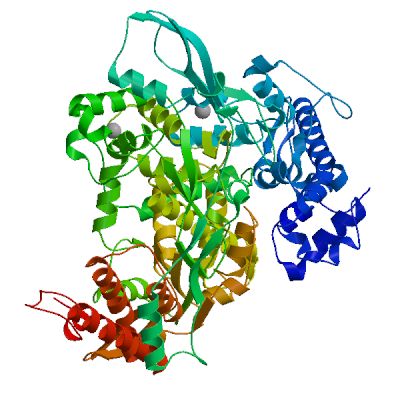
COVID-19, nsp12 on sinkkisormiproteiini

YP_009725307.1 (932 residues)RNA-directed RNA polymerase (Pol/RdRp): Responsible for replication and transcription of the viral RNA genome.


High quality models are available.

(VERTAA: Sars CoV. vaikutaa olevan samassa kohtaa  sinkkisormia. Asetan  vain muutaman tässä näkyviin. niitä on monta.
 Zinc coordinating  (HCCC-type)  interface.
Sars CoV  Niran domain and  interface, HCCHC,  (H295, C301, C306, H309, C310)
Fingers motif "G"   (CHCH)
Fingers motif "F" (C799, H810, C813, H816)
Fingers motif  "A"
Fingers motif, Palm, Motif B Xinc coordinating, tähän asti teksti koskee SArs CoV)
----

Alla oleva kuva on Sveitsin mallista nsp4, COVID-19.
ORIGIN
 1 sadaqsflnr vgvsaarlt pcgtgtstdv vyrafdiynd kvagfakflk tnccrfqekd
 61 eddnlidsyf vvkrhtfsny qheetiynll kdcpavakhd ffkfridgdm vphisrqrlt
 121 kytmadlvya lrhfdegncd tlkeilvtyn ccdddyfnkk dwydfvenpd ilrvyanlge
 181 rvrqallktv qfcdamrnag ivgvltldnq dlngnwydfg dfiqttpgsg vpvvdsyysl
 241 lmpiltltra ltaeshvdtd ltkpyikwdl lkydfteerl klfdryfkyw dqtyhpncvn
 301 ClddrCilHC anfnvlfstv fpptsfgplv rkifvdgvpf vvstgyhfre lgvvHnqdvn
 361 lhssrlsfke llvyaadpam haasgnllld krttcfsvaa ltnnvafqtv kpgnfnkdfy
 421 dfavskgffk egssvelkhf ffaqdgnaai sdydyyrynl ptmcdirqll fvvevvdkyf
 481 dcydggcina nqvivnnldk sagfpfnkwg karlyydsms yedqdalfay tkrnviptit
541 qmnlkyaisa knrartvagv sicstmtnrq fhqkllksia atrgatvvig tskfyggwhn
601 mlktvysdve nphlmgwdyp kcdrampnml rimaslvlar khttccslsh rfyrlaneca
 661 qvlsemvmcg gslyvkpggt ssgdattaya nsvfnicqav tanvnallst dgnkiadkyv
 721 rnlqhrlyec lyrnrdvdtd fvnefyaylr khfsmmilsd davvcfnsty asqglvasik
 781 nfksvlyyqn nvfmseakCw tetdltkgpH efCsqHtmlv kqgddyvylp ypdpsrilga
 841 gcfvddivkt dgtlmierfv slaidayplt khpnqeyadv fhlylqyirk lhdeltghml
 901 dmysvmltnd ntsrywepef yeamytphtv lq //

onsdag 4 mars 2020

Ajatuksia COVID-19 viruksen nsp2 ja nsp3 tekijästä ja niiden muutamista aminohappoeroista BSLV:n ja SARS-CoV:n vastaaviin nsp2 ja nsp3 proteiineihin 3

https://onlinelibrary.wiley.com/doi/full/10.1002/jmv.25719


 The ORF1ab of 15 COVID‐2019 sequences have been downloaded from GISAID (https://www.gisaid.org/) and GenBank (http://www.ncbi.nlm.nih.gov/genbank/) databanks. A dataset has been built using the five sequences of the severe acute respiratory syndrome (SARS) virus and five sequences from Bat SARS‐like virus sharing the highest sequence similarity to the COVID‐2019 sequence (Table 1). The pairwise percentage of similarity has been calculated using Basic Local Alignment Search Tool (https://blast.ncbi.nlm.nih.gov/Blast.cgi); duplicated sequences have been removed from the dataset. The 25 sequences have been aligned using a multiple sequence alignment multiple alignment using fast fourier transform online tool4 and manually edited using Bioedit program v7.0.5.5

2.2 Selective pressure analysis

The selective pressure analysis was focused on the polyprotein ORF1ab because it differs from the most similar bat Coronavirus (QHR63299) for only 103 amino acid residues, 64 of them are conservative changes. In particular, non structural protein 2 (nsp2) differs from bat Coronavirus for 11 residues while nsp3 for 64 residues of which 44 are conservative changes.
Adaptive Evolution Server (http://www.datamonkey.org/) was used to find eventual sites under of positive or negative selection pressure. At this purpose the following tests has been used: fast‐unconstrained Bayesian approximation (FUBAR).6 These tests allowed to infer the site‐specific pervasive selection, the episodic diversifying selection across the region of interest and to identify episodic selection at individual sites.7 Statistically significant positive or negative selection was based on P < .05.

2.3 Structural modelling

Homology modelling has been attempted with SwissModel8 and HHPred9 servers. Models for ORF1ab nsp2 and nsp3 proteins available at the I‐Tasser web site (corresponding to codes QHD43415_2 and QHD43415_3)10 have been considered. PDB Proteins structurally close to the target have been evaluated using the TM‐score11 while the RAMPAGE12 online tool has been used to assess the folding quality of the model.
To test for the presence of transmembrane helical segments in Coronavirus ORF1ab nsp2 and nsp3, TMHMM,13 MEMSAT,14 and MEMPACK15 online tools have been used. Three‐dimensional structures have been analyzed and displayed using PyMOL.16

3.1 Selective pressure analysis

Regarding the FUBAR analysis performed on the ORF1ab region, the presence of potential sites under positive selective pressure have been found (P < .05), in particular:

 on the amino acidic position 501 the COVID‐2019 has a glutamine (E) residue, the Bat SARS‐like coronavirus has a threonine (T) residue and the SARS virus has an alanine (A) residue.

At position 723 in the COVID‐2019 there is a serine (S) residue while the Bat SARS‐like virus and the SARS virus have a glycine (G) residue.

On the aminoacidic position 1010, the COVID‐2019 has a proline (P) residue, the Bat SARS‐like coronavirus has a histidine(H) residue and the SARS virus has an isoleucine (I) residue. Significant (P < .05) pervasive negative selection in 2416 sites (55%) has been evidenced and confirmed by FUBAR analysis.

3.2 Structural modelling

To map the structural variability of the ORF1ab region of the virus and its sites under selection pressure, homology modelling has been attempted. Unfortunately, neither SwissModel nor HHPred found suitable templates for the amino acid region containing the sites under selective pressure. For that reason, the corresponding models available on the I‐Tasser web site has been used. Moreover, some regions of the nsp2 and nsp3 proteins structurally homologous to other known viral proteins have been identified through HHpred analysis and have been mapped within the ORF1ab nsp2 and nsp3 sequences (Figure 1).

 image
A, HHpred mapping of the homologous structures onto the ORF1ab sequence shown as a blue line on the top of the panel. Numbering above the line refers to the entire ORF. Red and Blue strips represent the PDB homologous structures and the nsp2 and nsp3 sequences, respectively. PDB codes are reported within the corresponding red stripes. Numbering below the blue line is relative to each single nsp. Orange lines indicate approximately the positions of the transmembrane helices predicted by MEMSAT. Label refers to panel B. B, diagram of the topology of predicted transmembrane helices. Number refer to the corresponding nsp sequences. nsp, non structural protein; ORF, open reading frame
 

The results of the analysis suggest the presence of a segment within the nsp2 and the nsp3 regions that has no evident homologous structures. In an attempt to structurally characterize as far as possible these regions, TMHMM, MEMSAT, and MEMPACK analyses have been utilized and have shown the presence of several potential trans‐membrane helices (Figure 1). In particular, our transmembrane helices were predicted by MEMSAT in nsp2 while six helices were predicted by MEMSTA and TMHMM in nsp3 (Figure 1).

Referring to the amino acids under positive selective pressure found using the FUBAR analysis: the amino acid in position 501 (position 321 of the nsp2protein), the corresponding site in the Bat SARS‐like coronavirus has an apolar amino acid while the SARS and COVID‐2019 has a polar amino acid. It can be speculated, that due to its side chain length, polarity, and potential to form H‐bonds the glutamine amino acid(Q) may confer higher stability to the protein. The mutations fall within the protein nsp2 on the region homologous to the endosome‐associated protein similar to the avian infectious bronchitis virus (PDB 3ld1) that plays a key‐role in the viral pathogenicity. (Figure 2) In the nsp2 structure model available at the I‐Tasser site, this position appears to be exposed to the solvent.

Regarding the amino acid in position 1010 (corresponding to position 192 of the nsp3 protein), the homologous region of the Bat SARS‐like coronavirus and SARS virus have a polar(H) and an apolar amino acid (I), respectively, while the COVID‐2019 has proline (P). In this case, it may be speculated that due to the steric bulge and stiffness of the proline, the molecular structure of the COVID‐2019 may undergo a local conformation perturbation compared with the proteins of the other two viruses. In Nsp3, the mutation falls near the protein similar to a phosphatase present also in the SARS coronavirus (PDB code 2acf) playing a key‐role in the replication process of the virus in infected cells17 (Figure 3). In the I‐Tasser model, the position is partially accessible to the solvent. It should be emphasized that all these considerations are speculative and they need to be substantiated by the availability of the experimental crystallographic structure of the corresponding proteins. 

4 DISCUSSION

The COVID‐2019 ongoing epidemic is worrying worldwide for its high contagiosity. From its first appearance in Wuhan, China, about 1 month ago, the virus infected thousands people with new cases number rapidly growing every day. For this acceleration in human‐to‐human transmission in China but with evident spreading also in other countries, World Health Organization declared the epidemic a global health emergency.18, 19
Many questions are open and need an answer, of these the most frequent is how much this virus can be dangerous and how much it differs from SARS virus which epidemic scared all the world some years ago. In this study some interesting findings have been evidenced to support and fill gaps in knowledge about the new COVID‐2019 that is still causing infection all over the world.20, 21

The positive selective pressure in this protein could justify some clinical features of this virus compared with SARS and Bat SARS‐like CoV.22
First which are the probably most common sites undergoing to an aminoacidic change, providing an insight of some important proteins of the COVID‐2019 that are involved in the mechanism of viral entry and viral replication. This data can contribute for a better understanding of how this virus acts in its pathogenicity.
Furthermore, to identify a potential molecular target is fundamental to follow the molecular evolution of the virus suggesting some interesting sites for potential therapy or vaccine.
The structural similarity of the region in which falls the positive selective pressure as so as the stabilizing mutation falling in the endosome‐associated‐protein‐like domain of the nsp2 protein, could explain why this virus is more contagious than SARS.
The destabilizing mutation happening near the phosphatase domain of the nsp3 proteins could suggest a potential mechanism differentiating COVID‐2019 from SARS.
The results of this study could fill some gaps about COVID‐2019 knowledge especially in the actual moment when the epidemic is ongoing and the scientific community is trying to enrich knowledge about this new viral pathogen. During epidemic, all strength has to be done to enforce virus fight. This can be achieved by understanding the main drivers for pathogen appearance, spreading, and supremacy on human defense.

tisdag 3 mars 2020

COVID-19, ORF4 rakenneproteiini, Envelope, E , pieni membraaniproteiini, 75 aminohappoa

  gene            26245..26472
                     /gene="E"
                     /locus_tag="GU280_gp04"
                     /db_xref="GeneID:43740570"
     CDS             26245..26472
                     /gene="E"
                     /locus_tag="GU280_gp04"
                     /note="ORF4; structural protein; E protein"
                     /codon_start=1
                     /product="envelope protein"
                     /protein_id="YP_009724392.1"
                     /db_xref="GeneID:43740570"
                     /translation="MYSFVSEETGTLIVNSVLLFLAFVVFLLVTLAILTALRLCAYCC
                     NIVNVSLVKPSFYVYSRVKNLNSSRVPDLLV"

COVID-19 viruksen ORF1ab

https://jvi.asm.org/content/88/2/1293
ORF1ab COVID-19
https://www.ncbi.nlm.nih.gov/gene/?term=ORF1ab+COVID-19 
Tässä kuvassa näkyy miten S alkaa  kirjoittautua proteiiniksi tämän jälkeen ensin  ja sitten 3a
Preferred Names
orf1a polyprotein;orf1ab polyprotein
Names
leader protein
nsp2
nsp3
nsp4
3C-like proteinase
nsp6
nsp7
nsp8
nsp9
nsp10
RNA-dependent RNA polymerase
helicase
3'-to-5' exonuclease
endoRNAse
2'-O-ribose methyltransferase
nsp11
YP_009724389.1
  • pp1ab; translated by -1 ribosomal frameshift
YP_009725295.1
  • pp1a


ORF10 (29558..29674), COVID-19, jokin pieni lisäproteiini ORF10 proteiini

https://www.ncbi.nlm.nih.gov/gene/43740576
 

ORF10 ORF10 protein [ Wuhan seafood market pneumonia virus ]

Gene ID: 43740576, updated on 28-Jan-2020
Gene symbol
ORF10
Gene description
ORF10 protein
Locus tag
GU280_gp11
Gene type
protein coding
RefSeq status
PROVISIONAL
Organism
Wuhan seafood market pneumonia virus (isolate: Wuhan-Hu-1, nat-host: Homo sapiens)
Lineage
Viruses; Riboviria; Nidovirales; Cornidovirineae; Coronaviridae; Orthocoronavirinae; Betacoronavirus; unclassified Betacoronavirus
https://www.ncbi.nlm.nih.gov/protein/YP_009725255.1 
 
FEATURES             Location/Qualifiers
     source          1..38
                     /organism="Severe acute respiratory syndrome coronavirus
                     2"
                     /isolate="Wuhan-Hu-1"
                     /host="Homo sapiens"
                     /db_xref="taxon:2697049"
                     /country="China"
                     /collection_date="Dec-2019"
     Protein         1..38
                     /product="ORF10 protein"
                     /calculated_mol_wt=4318
     CDS             1..38
                     /gene="ORF10"
                     /locus_tag="GU280_gp11"
                     /coded_by="NC_045512.2:29558..29674"
                     /db_xref="GeneID:43740576"
ORIGIN      
        1 mgyinvfafp ftiyslllcr mnsrnyiaqv dvvnfnlt
//
 
   gene            29558..29674
                     /gene="ORF10"
                     /locus_tag="GU280_gp11"
                     /db_xref="GeneID:43740576"
     CDS             29558..29674
                     /gene="ORF10"
                     /locus_tag="GU280_gp11"
                     /codon_start=1
                     /product="ORF10 protein"
                     /protein_id="YP_009725255.1"
                     /db_xref="GeneID:43740576"
                     /translation="MGYINVFAFPFTIYSLLLCRMNSRNYIAQVDVVNFNLT"
     3'UTR           29675..29903
ORIGIN       

ORF8, COVID-19 , uudismuotoinen COVID- lisäproteiini ORF8 proteiini

https://www.ncbi.nlm.nih.gov/gene/?term=ORF8+%2C+COVID-19
ORF8, 121 aminohappoa 
https://www.ncbi.nlm.nih.gov/protein/YP_009724396.1 
FEATURES             Location/Qualifiers
     source          1..121
                     /organism="Severe acute respiratory syndrome coronavirus
                     2"
                     /isolate="Wuhan-Hu-1"
                     /host="Homo sapiens"
                     /db_xref="taxon:2697049"
                     /country="China"
                     /collection_date="Dec-2019"
     Protein         1..121
                     /product="ORF8 protein"
                     /calculated_mol_wt=13700
     CDS             1..121
                     /gene="ORF8"
                     /locus_tag="GU280_gp09"
                     /coded_by="NC_045512.2:27894..28259"
                     /db_xref="GeneID:43740577"
ORIGIN      
        1 mkflvflgii ttvaafhqec slqsctqhqp yvvddpcpih fyskwyirvg arksapliel
       61 cvdeagsksp iqyidignyt vsclpftinc qepklgslvv rcsfyedfle yhdvrvvldf
      121 i
//

ORF7a, COVID-19, ( Orfien rakentumiskaava tällä viruksella)

https://www.ncbi.nlm.nih.gov/protein/?term=Wuhan+seafood+market+pneumonia+virus+ORF7a
ORF raamien rakentuminen tällä viruksella 

ORF7a   (121 aminohappoa) COVID-19 viruksen lisäproteiini

 https://www.ncbi.nlm.nih.gov/protein/QHZ00404.1

FEATURES             Location/Qualifiers
     source          1..121
                     /organism="Severe acute respiratory syndrome coronavirus
                     2"
                     /isolate="2019-nCoV/USA-MA1/2020"
                     /isolation_source="oropharyngeal swab"
                     /host="Homo sapiens"
                     /db_xref="taxon:2697049"
                     /country="USA: MA"
                     /collection_date="29-Jan-2020"
                     /note="5' sequence is primer used"
     Protein         1..121
                     /product="orf7a protein"
     CDS             1..121
                     /gene="orf7a"
                     /coded_by="MT039888.1:27394..27759"
ORIGIN      
        1 mkiilflali tlatcelyhy qecvrgttvl lkepcssgty egnspfhpla dnkfaltcfs
       61 tqfafacpdg vkhvyqlrar svspklfirq eevqelyspi flivaaivfi tlcftlkrkt
      121 e
//

måndag 2 mars 2020

ORF6 , COVID-19

https://www.ncbi.nlm.nih.gov/gene/?term=Wuhan+seafood+market+pneumonia+virus+ORF6

ORF6, 61 aminohappoa

 https://www.ncbi.nlm.nih.gov/protein/1791269094


FEATURES             Location/Qualifiers
     source          1..61
                     /organism="Severe acute respiratory syndrome coronavirus
                     2"
                     /isolate="Wuhan-Hu-1"
                     /host="Homo sapiens"
                     /db_xref="taxon:2697049"
                     /country="China"
                     /collection_date="Dec-2019"
     Protein         1..61
                     /product="ORF6 protein"
     CDS             1..61
                     /gene="ORF6"
                     /coded_by="MN908947.3:27202..27387"
ORIGIN      
        1 mfhlvdfqvt iaeilliimr tfkvsiwnld yiinliiknl sksltenkys qldeeqpmei
       61 d
//